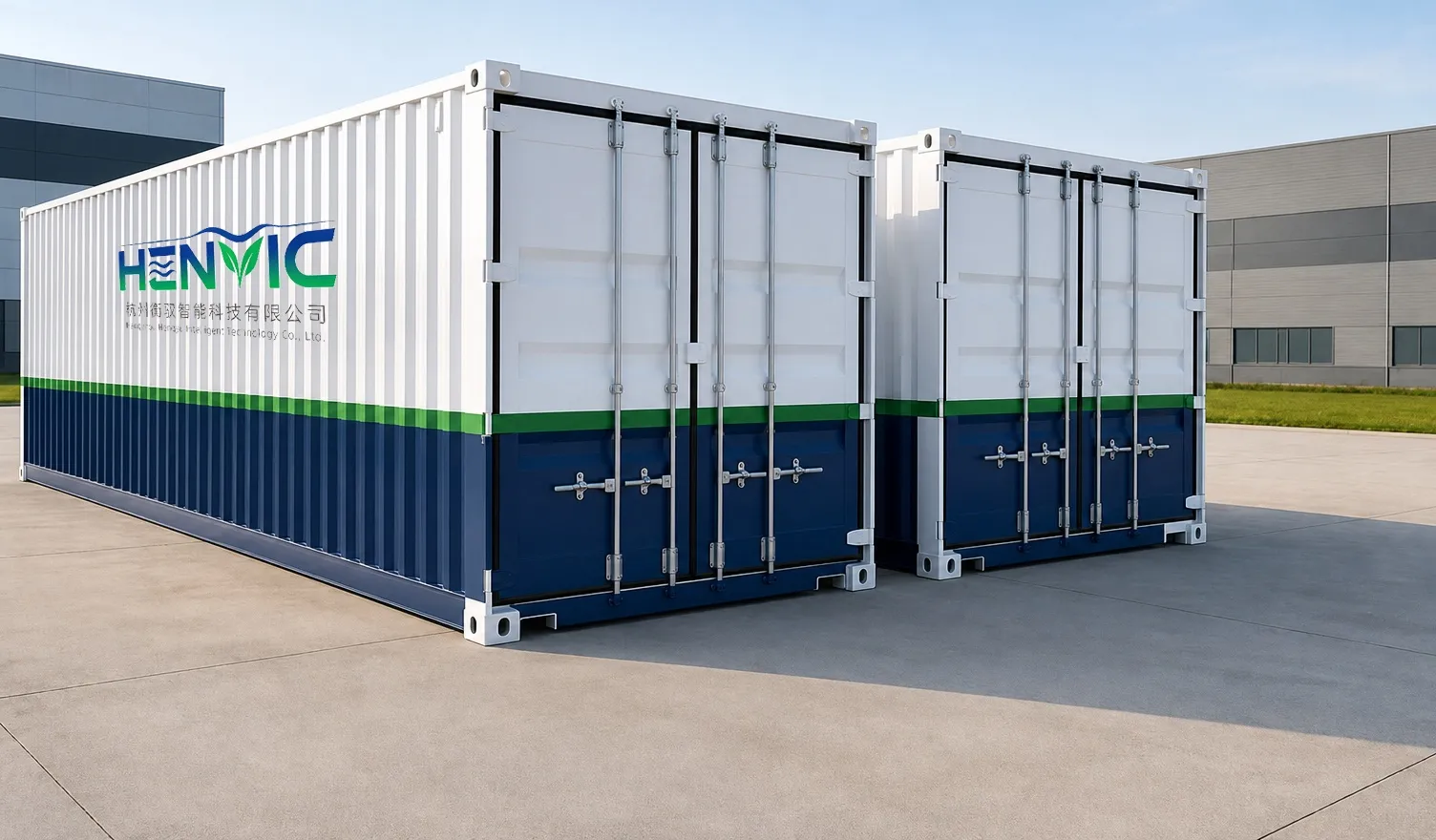
The technology of container farming is mature enough that the interesting question is no longer whether a box can grow plants. It is where the box should be placed, who the customer is, and what business model makes the placement pay. Container farms fail more often from misaligned commercial design than from hardware faults.
The pilot as a legitimate end state
The most underrated use of a container farm is as a pilot that answers questions before a large facility is built. A concrete-and-glass vertical farm is a construction project with a two-to-four-year horizon and a capital commitment that is difficult to reverse. A container unit can be commissioned in weeks and operated for a year to establish real numbers for yield, labour hours per kilogram, energy consumption per kilogram, and the achievable selling price in a specific market. Those numbers are the only reliable basis for a decision about scaling, and obtaining them any other way requires either trusting a vendor's pro forma or building the large facility on assumption.
This use case is defensible even if the container never becomes profitable on its own, because the value is information rather than produce. Research institutions, universities and agtech developers use containers for exactly this reason, and their willingness to pay reflects the cost of the alternative.
The on-site amenity model
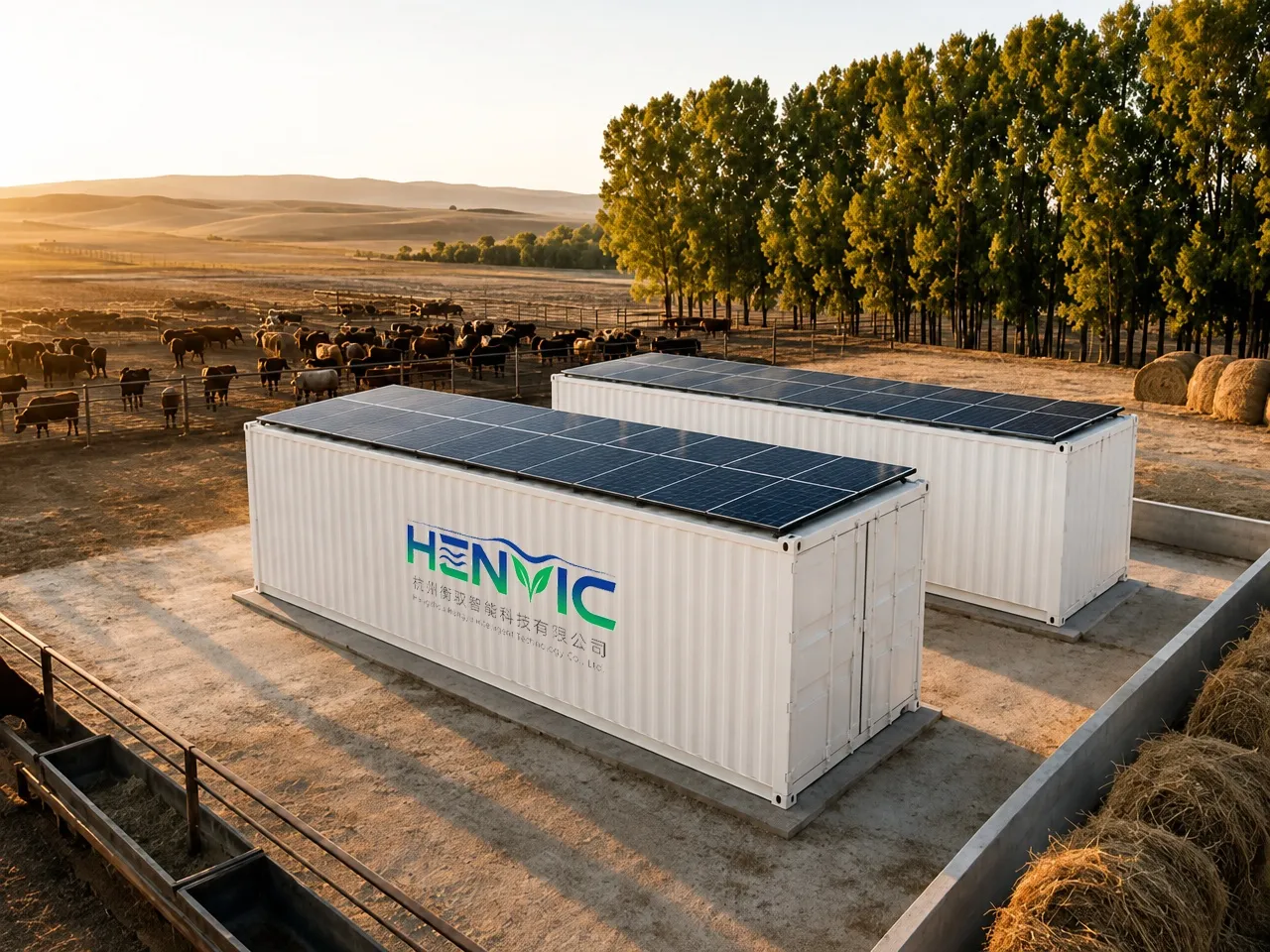
The container's ability to be placed adjacent to its customer is its single most distinctive commercial property. The most direct way to monetise that is to install the unit on the customer's premises.
A restaurant with a container farm in its yard or on its roof can harvest herbs and specialty leaves within minutes of service, eliminate the cold chain for those items, and present the arrangement to diners as part of the experience. The economics are not those of a farm selling produce; they are those of a restaurant reducing its procurement cost for a perishable, high-markup input while gaining a marketing asset. Restaurants that serve high volumes of fresh herbs can justify the capital on the herb spend alone, and the unit remains an owned asset rather than a leasehold improvement if the restaurant relocates.
Supermarkets and food halls use the same logic. A container or an in-store growing installation allows the retailer to offer a product — harvested-on-site herbs and salad — that no competitor can match with a distribution model, and it performs a merchandising function independent of its farming margin. Hotel groups and corporate campuses deploy them for employee amenities, food-service supply, and as a visible sustainability commitment.
The critical requirement in all of these cases is that the host organisation must be able to operate the unit. Container farms are not appliances. They require daily attention, a competent grower or a well-designed remote support arrangement, and a willingness to treat the facility as critical infrastructure. Amenity installations that are treated as decorative plants fail.
Direct-to-consumer and subscription models
A container farm selling through a subscription box or a farmers' market delivers produce with a freshness advantage that is real and demonstrable. Salad leaves and herbs that were harvested the same morning maintain turgor and aroma in a way that cold-chain produce does not, and consumers who have experienced the difference will pay a premium.
The economics of this channel require attention to density. A 4,500-kilogram annual output distributed to a few hundred subscribers is manageable; the same output spread across a wide geography in small deliveries consumes the margin in logistics. Container farms serving direct consumers therefore work best in dense urban markets with a concentrated subscriber base and efficient last-mile arrangements, or where the unit is co-located with a retail or market venue that customers visit anyway.
The recurring revenue characteristic of subscription models also fits the production pattern of a container farm better than wholesale contracts do. A supplier selling into a wholesale market absorbs price volatility driven by field harvests and imports; a subscription business with a stable customer base and a stable price can match its planted area to its contracted demand and largely avoid exposure.
Propagation and seedling supply
Propagation is one of the strongest economic applications for containers and is often overlooked because it is less visible than growing a finished salad crop.
A propagation container is filled with trays of seedlings at high density for a short period — typically two to three weeks — and then emptied. The environmental requirements are exacting: uniform temperature, controlled humidity to prevent damping-off, precise light delivery to prevent stretching, and complete freedom from pests and pathogens at the most vulnerable stage of the plant's life. These are precisely the conditions a sealed container delivers.
For a nursery or a vegetable producer, buying a container propagation unit replaces a variable and weather-dependent process with a controlled one, extends the propagation season to year-round, and reduces seedling losses. For the container operator, the short crop cycle means the asset turns over many times a year, so capital efficiency is high even though the selling price per plant is low.
The container as a product rather than a farm
A distinct business model treats the container farm itself as the product. Some suppliers sell turnkey units with training, remote monitoring and a software subscription; others offer franchising arrangements with a central brand and a standardised operating recipe; a few lease units on a per-kilogram or per-month basis.
The attraction of this model is that it separates the manufacturing and support business from the growing business, allowing each to specialise. The risk is that a franchisee with no horticultural experience, operating in a market that has not been independently validated, will fail, and will attribute the failure to the hardware. Container farming, like any controlled-environment agriculture, requires a competent operator. No amount of software and remote support substitutes for someone who notices that a crop looks wrong two days before the sensors do.
Site selection and the hidden constraints
Site selection determines project viability more often than the choice of equipment does.
Electrical capacity is the first filter. A unit drawing 30 to 45 kilowatts continuously needs a three-phase service with adequate headroom, and the cost of upgrading a constrained connection can exceed the cost of the container. Sites that already have heavy electrical infrastructure — industrial buildings, food-processing sites, commercial kitchens, wastewater treatment plants — are therefore preferable.
Climate is the second filter. In hot, humid climates the refrigeration load is higher and the electricity price is often set by air-conditioning demand, so both the numerator and the denominator of the energy cost ratio move in the wrong direction. In cool, maritime climates with cheap hydroelectric power, the same hardware operates at a fraction of the annual energy cost. Two identical containers in two locations can have energy bills that differ by a factor of three.
Water and drainage are the third. A container farm consumes water mainly through transpiration and condensate losses, but it needs a reliable supply, a drain connection, and a plan for the concentrated nutrient solution that must eventually be discharged when the solution is replaced. Discharge rules vary by jurisdiction and, in some locations, are stringent enough to require treatment or off-site disposal.
Access and logistics matter for a fourth reason: consumables come in and produce goes out daily, and a site without adequate vehicle access and a loading area will add labour to every operation.
What determines whether a deployment succeeds
Across all these models, three factors recur. The first is whether the site can supply power at an acceptable cost and with adequate capacity. The second is whether there is a customer willing to pay a premium for proximity and freshness rather than for volume at commodity prices. The third is whether someone competent is available to operate the unit daily.
A deployment that satisfies all three has a reasonable chance. One that fails any of them will fail regardless of the quality of the hardware, which is why the most successful container farm businesses are those that spent as much time on site surveys, customer contracts and operating capability as on equipment specification.
Article Six: Beyond the Hype — Sustainability, Constraints and the Long-Term Trajectory
Container vertical farming has been described both as a solution to the future of food and as an energy-intensive curiosity. Neither characterisation survives contact with the numbers. What the technology actually offers is a narrow but genuine capability — reliable, controllable, pest-free production of high-value crops close to the point of consumption — and a set of limitations that are inherent rather than temporary.
The sustainability claims, examined
The environmental case for container farming rests on several claims, and they are not equally strong.
Water use is the strongest. A recirculating hydroponic system transpires water through the crop but captures and returns the condensate, so the only losses are the water incorporated into plant tissue and the small amount lost at harvest and through leakage. Compared with field irrigation, which is dominated by evaporation, deep percolation and runoff, the reduction is genuinely on the order of 90 to 95 percent. In regions where water is scarce or where aquifer depletion is a live problem, this is a material benefit.
Pesticide use is also genuinely near zero. A sealed environment excludes insect pests, and the remaining disease pressure is managed through climate control and sanitation rather than chemistry. For crops that are eaten raw and for markets where residue limits are tightening, this has commercial value as well as environmental value.
Land use is more nuanced. Yields per square metre are high because the growing area is stacked three to five times, so the footprint for a given output is small. But the land requirement was rarely the binding constraint for leafy greens, which are not land-scarce crops. The benefit is real in specific settings — urban sites where arable land is unavailable at any price — and largely theoretical elsewhere.
Transport emissions depend entirely on what is being displaced. A container farm supplying a city with produce that would otherwise be air-freighted or trucked long distances reduces emissions meaningfully. One supplying a market that is already served by local field growers displaces very little.
Energy is the claim that does not hold up. Container farming consumes far more energy per kilogram than field or greenhouse production of the same crop, and the carbon intensity of that energy determines whether the overall environmental balance is favourable. A container farm running on coal-fired electricity is not an environmental improvement over a field-grown imported lettuce; it is likely worse. The same facility on hydroelectric, nuclear or renewable power is a different proposition. Any honest sustainability assessment must begin with the grid, not the technology.
The constraints that are structural
Several limitations are not engineering problems awaiting a solution. They follow from physics.
Yield per kilowatt-hour is the binding constraint. Photosynthesis converts a small fraction of incident light energy into biomass, and artificial lighting delivers photons at a cost. Even with the best available LEDs, the electricity required per kilogram of produce is high enough that only crops with substantial value per kilogram can carry it. Grain, pulses, root vegetables and most fruit will never be economically viable under artificial light, and no foreseeable improvement in LED efficacy changes that conclusion by more than a factor of two. The technology's addressable crop list is short and will remain short.
Sealed systems concentrate risk as well as control. A recirculating nutrient solution is a single connected network and a single point of failure; a pathogen introduced anywhere reaches everywhere. A sealed box with a large electricity demand and no thermal buffer fails within hours of a power interruption rather than days. Pollination must be performed by hand or by introduced insects for fruiting crops, adding labour and biological risk. And because the environment is artificial, it depends on continuous active management — there is no fallback to natural processes if a controller malfunctions.
Humidity management within a sealed volume is intrinsically difficult. The heat and moisture loads are generated inside the box and must be removed mechanically, whereas a greenhouse can often vent them at negligible energy cost. This is the specific reason why container farms have a higher energy intensity than greenhouses for the same crop, and it is a consequence of the containment that gives the container its advantages.
Talent is a softer constraint but a real one. Operating a container farm requires competence in horticulture, refrigeration, electrical systems, water chemistry and data interpretation, in a single person or a small team. That combination is uncommon, and the current supply of trained operators is small relative to the number of units being deployed. Many installations underperform not because the equipment is inadequate but because the operator cannot diagnose a nutrient drift or does not recognise early disease symptoms.
Failure modes observed in practice
Container farms that have been shut down generally failed for recognisable reasons. The most common is an energy bill that exceeded the original projection, usually because the site survey underestimated the refrigeration load or the local tariff was higher than assumed. The second is over-optimism about the selling price, with produce marketed into a wholesale channel where field-grown competition set the ceiling. The third is operational failure — a neglected facility, a poorly trained grower, or a design that a single person cannot realistically maintain. The fourth is crop selection: units that grew lettuce and competed on price rather than growing herbs and selling on quality.
The trajectory
The container format is best understood as a modular building block rather than a final architecture. Its durable contribution is that it standardised the growing environment, turning it into a manufactured object with documented parameters that can be reproduced. That standardisation has consequences well beyond the container itself: it makes controlled-environment growing easier to finance, easier to pilot, easier to relocate and easier to teach.
Several directions of development follow from that. Hybrid systems that combine a container's environmental control with a greenhouse's free solar gain and ventilation are already being used to reduce energy intensity for crops that need less light than a tomato but more than a container can economically provide. Retrofitting containers into existing buildings — using the box as an insulated, controlled module inside a larger structure — captures the standardisation benefit without the thermal exposure of an outdoor shell. Advances in LED efficacy and the declining cost of photovoltaic electricity both improve the arithmetic on a line that is currently the dominant one.
Decarbonisation of the grid is the single most important external variable. If the electricity supply in a given market falls to a low carbon intensity and the price remains moderate, the container's core weakness becomes less significant and its addressable crop list lengthens. If the opposite occurs, the technology remains confined to the premium niche it currently occupies.
A defensible position
The sensible position for anyone assessing container farming is neither enthusiasm nor dismissal. The technology does something real: it produces specific, valuable crops reliably and predictably, anywhere with power and a hardstanding, with near-zero pesticide use and minimal water consumption. It does not do something else: it does not produce staple food cheaply, and it never will, because the energy required is intrinsic to the method.
The projects that succeed are those that have chosen the right crops, placed the unit next to customers willing to pay for proximity and quality, secured power at an acceptable cost, and ensured that someone competent is running the box every day. Those conditions are demanding but not unusual, and where they are met, container farming is a legitimate part of a food system rather than a demonstration of one.