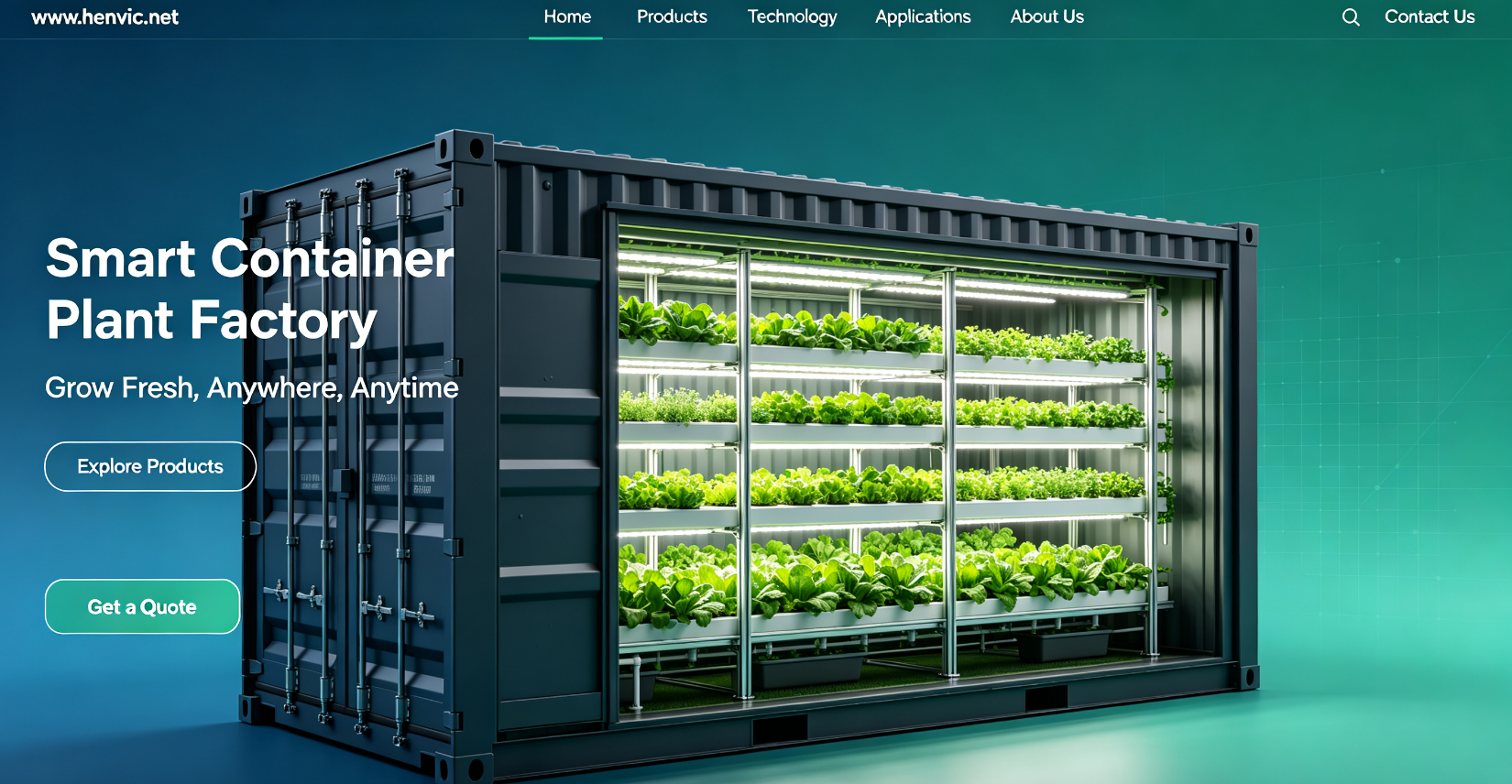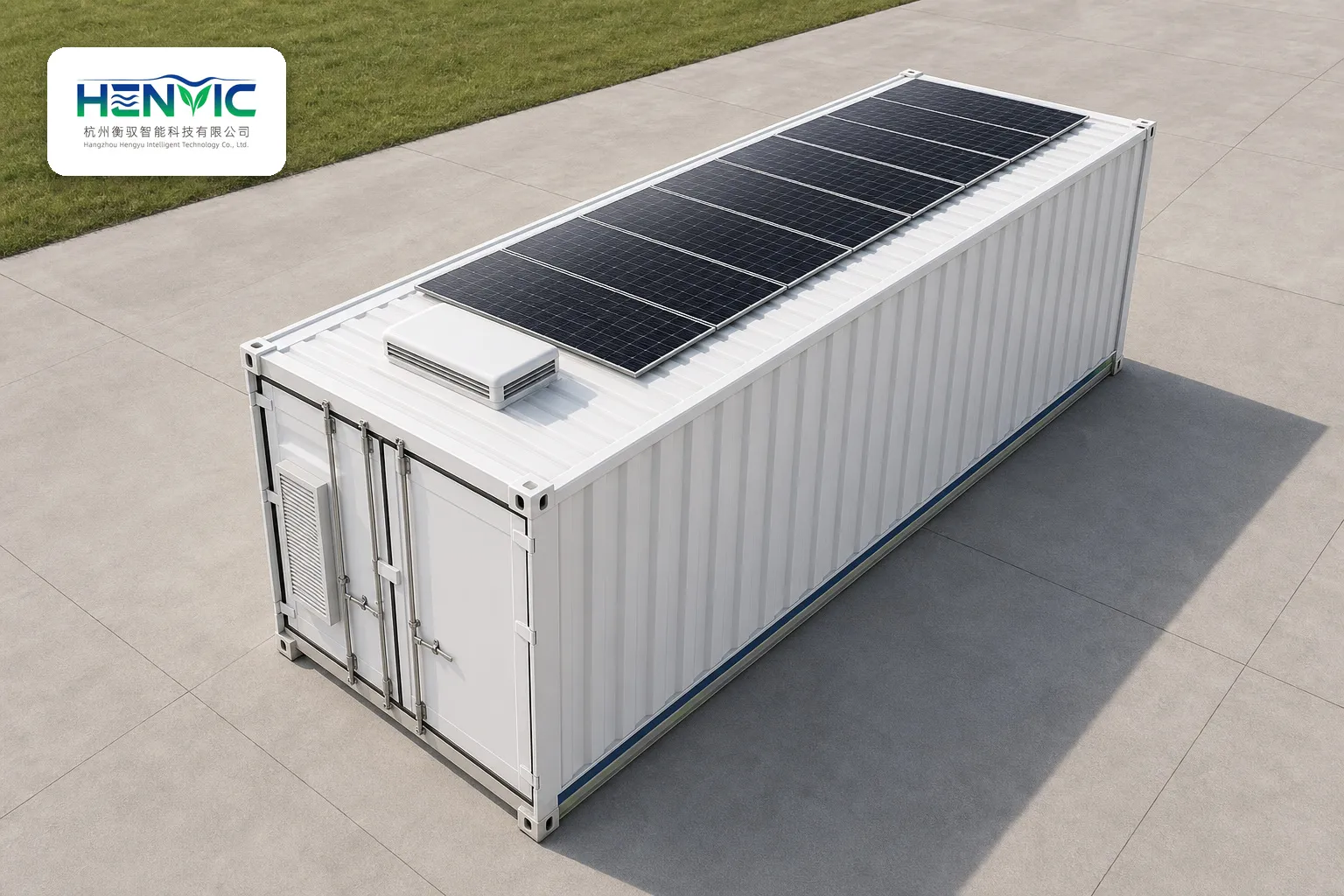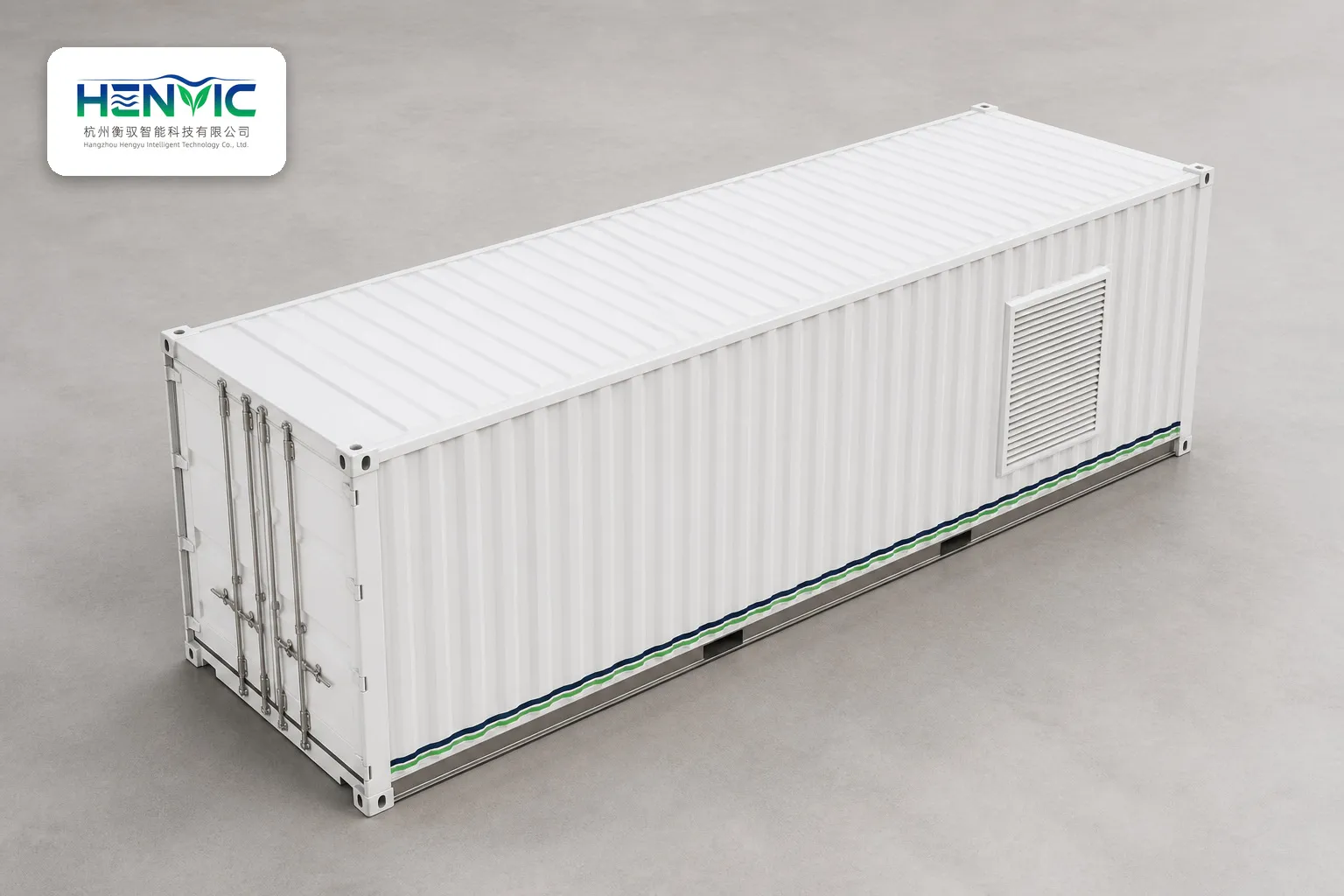
Plant cultivation containers — the insulated, climate-controlled modules commonly built on ISO shipping-container shells or purpose-fabricated panel boxes — have evolved from a technology demonstration into a distinct industrial category with its own supply chain, vendor landscape, customer segments and competitive logic. The industry's defining characteristic is that it sells an environment rather than a structure: the buyer is not purchasing a building but a repeatable, transportable set of growing conditions, specified as equipment and deployed in weeks rather than months. Understanding the sector means understanding who makes these units, who buys them and why, how the money actually flows, where the technology is standardised versus contested, and which failure modes repeatedly destroy entrants on both the supply and demand side.
1. What the Industry Actually Sells
The product category is broader than the phrase "container farm" suggests, and the segmentation matters commercially because each sub-category has a different buyer, different price point and different technical risk.
By crop regime. The market splits first by organism, because the environmental requirements are incompatible. Photosynthetic leafy-green and herb units dominate volume; fruiting-vegetable units (tomato, strawberry, pepper) sit at higher light and CO₂ densities with pollination and canopy-load complexity; mushroom units operate warm, dark and saturated with a completely different contamination logic; specialty units serve medicinal crops, seedlings, algae, insects and research applications. A vendor's credibility in one regime does not transfer to another.
By function in the production chain. Propagation/nursery pods, finishing pods, and hybrid multi-stage pods are distinct products. The industry's most robust architecture — a centralised nursery feeding multiple distributed finishing containers — is also the configuration that is hardest for a single-box vendor to sell, which is why so much marketing promotes the all-in-one unit that serious operators avoid.
By deployment setting. Commercial urban production, remote/off-grid (mining camps, islands, garrisons), institutional and municipal supply programmes, marine and polar applications, research and demonstration, and education. Procurement logic differs sharply across these: commercial buyers evaluate cost per kilogram, while remote and institutional buyers evaluate cost against the alternative — airfreight, spoil, or no fresh produce at all.
By equipment class. Turnkey integrated units from branded vendors versus shell-only modules versus retrofit kits for existing containers versus engineering-procurement packages assembled on site. Price dispersion across these classes is large, which is a persistent source of buyer confusion.
2. Market Structure and Growth Logic
The containerised cultivation segment sits inside the wider controlled-environment-agriculture (CEA) and vertical-farming market, and its growth is best understood as a share shift rather than a standalone boom. Published market analyses place the global vertical-farming market in the tens of billions of US dollars with low-double-digit annual growth, and dedicated container-farm and containerised-plant-room reports from research firms such as QYResearch and Stratistics Market Research Consulting track the container format specifically. These figures should be treated as directional: definitions of what counts as a "container farm" vary widely across research houses, and vendor-reported revenue is not disclosed in audited form for most private players.
Four structural drivers are doing the real work behind whatever the headline number is.
Permitting and capital-treatment arbitrage. In many jurisdictions a containerised module is procured and sited as equipment rather than as a building, which shortens or bypasses the construction-permit path, reduces foundation and civil work, and produces a depreciation profile that is easier to justify for a pilot. Deployment in weeks rather than months is itself a competitive feature for operators testing a market or a crop.
Land and climate substitution. The format's value proposition is environmental substitution, not agricultural efficiency. It competes against expensive or absent field capacity — desert heat, deep winter, land-scarce cities, island nations, remote industrial sites — and against the logistics cost of bringing fresh produce there. It does not out-compete open-field farming on unit cost, and vendors who pitch it that way are setting up their own reputational failure.
Footprint leverage. Vendors commonly cite ratios of the order of 30 m² of container base area supporting a cultivation area equivalent to 150 m² of flat farmland, with several times the productivity of conventional planting. These are physical ratios, and the buyer is effectively purchasing output per square metre of base area — which is the correct unit of comparison in land-constrained markets and an irrelevant one where land is cheap.
Policy and supply-security framing. In several markets, local leafy-vegetable supply stability and food-security resilience are explicit policy objectives, which creates municipal, institutional and demonstration procurement independent of pure commercial economics. This is a real and durable demand channel, and it is also the channel most vulnerable to being mistaken for a commercial market.
3. The Value Chain
Upstream. Horticultural LED fixtures and drivers; HVAC and dehumidification equipment (the most common technical weak point in the whole chain); insulated panel and container shells; irrigation, dosing, and sensor packages; control and software platforms; seed genetics and seedlings; nutrient salts and substrates; and increasingly the data and recipe layer that turns hardware into repeatable output.
Two upstream dynamics shape competitive position. First, lighting is the largest cost component and the fastest to become obsolete, which means a container's capital base depreciates in economic as well as accounting terms — a unit bought with 2.5 μmol/J fixtures ages harder than its shell. Second, HVAC is where projects most often fail technically: units specified on cooling capacity rather than dehumidification capacity at design canopy density hit temperature setpoint while humidity climbs, which produces tip burn, condensation on cold surfaces and mould events. A vendor's willingness to publish a latent-load calculation distinguishes an engineering firm from a reseller.
Midstream — the integrators. These divide into three archetypes. Branded technology vendors sell proprietary pods with software, recipes and service contracts, capturing recurring revenue. Shell and fit-out manufacturers, many concentrated in China's Shandong and Guangdong supply clusters, sell modules at competitive price points with lighter service commitments. Engineering integrators assemble systems to specification from third-party components, competing on design competence rather than product. A fourth type is emerging: agricultural clusters exporting the whole capability, of which the clearest documented example is Shouguang, Weifang — where a mature vegetable industry's seed-breeding base, horticultural knowledge, nutrient and equipment supply chains and regional brand were packaged into container units exported to the UAE, Canada, the Netherlands, and a reported thirteen countries in total.
Downstream — channels. Direct 2B sales to growers and food processors; 2G sales to municipal and institutional programmes; 2B2C equipment leasing and franchise models; remote-site procurement through defence, marine, mining and scientific channels; and education and demonstration sales, where the unit functions as a teaching asset.
Horizontal players. Energy-management and automation majors have entered as technology partners rather than box builders, supplying the electrical, control and monitoring layer to cultivation-container integrators. This pattern — a large industrial-automation vendor partnering with a vertical integrator — signals the sector's shift from horticulture to process engineering, and it is where the industry's credibility is being built.
4. Business Models and Where the Money Is
Selling the box. One-time capital sale with warranty. Margin lives in procurement, panel fabrication and fit-out. Vulnerable to price competition and to commoditisation of the shell, and exposed to post-sale performance disputes when the buyer's yield disappoints.
Selling production. The vendor operates pods and sells produce into a channel — supermarkets, restaurant groups, processors, export traders. Higher working-capital demand, but the vendor captures the price premium rather than only the equipment margin, and retains control of the recipe.
Selling the lease or franchise. Asset stays on the vendor's balance sheet, buyer pays monthly for output or capacity. Attractive for capital-constrained growers, but it makes the vendor a financier and concentrates crop-price and crop-failure risk.
Selling the service layer. Recipes, remote monitoring, consumables, spare parts, technical support and yield guarantees. This is where the strongest long-term economics sit, for the same reason they sit there in any process-equipment industry: the installed base generates recurring revenue, and the vendor's recipe knowledge compounds.
Selling to non-commercial demand. Municipal supply programmes, institutional kitchens, remote operations and demonstration centres, where procurement is justified by resilience, nutrition, water saving, education or political objectives rather than by unit cost.
The industry's honest economics are uncomfortable to state plainly: capital cost is one line, and the recurring costs — electricity for lighting and dehumidification, labour for sowing, tending, harvesting and packing, and the value of crop that fails grading — are usually decisive. Reported figures in this sector tend to be physical outputs (plants per batch, harvests per year, cycle length, footprint ratio, water saving percentages) rather than audited profit-and-loss. A resource ratio can be excellent while the business loses money, and vendors who present productivity multipliers without a loss allowance are describing a demonstration, not a business.
5. Customer Segments and Their Real Decision Criteria
Commercial urban growers. Evaluate saleable Grade-A kilograms per square metre of canopy per week, grams of saleable product per kWh, litres of freshwater per kilogram, and cycle time including fallow and clean-down. The dominant risks are grading loss (tip burn from a VPD failure, bolting from photoperiod leakage) and labour, which remains the largest recurring line because leafy and fruiting crops are still harvested and packed by hand in most pods.
Municipal and food-security programmes. Justified by supply stability, water efficiency and ready-to-eat safety. Reported water savings of the order of 90% versus conventional cultivation are a licensing and compliance asset in water-constrained jurisdictions, and one of the few claims in the sector that is straightforwardly verifiable by metering.
Remote and hostile-environment operators. Mining camps, islands, military garrisons, polar stations, research and merchant vessels. Here the comparison is not against field agriculture but against airfreight, spoilage, or the absence of fresh produce, and the unit is frequently justified on crew nutrition and morale grounds alone. Marine and polar deployments are the sector's most vivid proof of environmental decoupling and its least transferable commercial evidence.
Export and processing-oriented buyers. Operations whose output is dried, freeze-dried or otherwise processed escape the fresh-produce shelf-life cliff and the price floor of commodity wholesale. This is a commercially significant and frequently overlooked segment, because the container's weakest point — the cost of fresh grading, packing and cold-chain handling — is largely neutralised by a processed product form.
Researchers, educators and integrators. Where the container is a controlled-environment instrument rather than a farm, and where the purchase is justified by repeatability and data logging rather than by yield.
6. Competitive Dynamics
The sector is consolidating, though from a fragmented base. Competitive position is being decided on five axes rather than on the shell.
Recipe and biological competence. The hardware is commoditising; the difference between two pods with identical equipment lists is the climate and nutrition regime running inside them. Vendors with crop-specific, validated recipes command a durable premium, and the recipe layer is where intellectual property is concentrating.
Documented engineering rather than asserted performance. Buyers increasingly demand measured PPFD maps at canopy level, latent-load calculations with stated assumptions, and dehumidification capacity in litres per day — not figures derived from fixture datasheets.
Service and fleet capability. A single container has no redundancy: one compressor failure, dosing error or labour gap stalls the whole pipeline. Vendors who can support a fleet of N+1 pods on staggered cycles, with spare-part lead-time commitments for lamps, drivers, pumps and compressors, are selling an operating system rather than a product box.
Channel control. Whoever owns the offtake captures the price premium. Vendors with an export trading arm, a processor relationship or a retail listing are structurally advantaged over those who sell equipment into growers who must then find a buyer.
Certification and compliance support. Electrical certification and refrigerant-handling marks for the destination jurisdiction, produce-safety documentation and lot-level traceability are entry requirements in developed markets, and a vendor who cannot supply them in writing converts a sale into a project delay.
7. Standards, Certification and Regulation
This is the industry's least mature and most underappreciated structural weakness: the regulatory treatment of a cultivation container is unsettled in most jurisdictions, and it is resolved case by case.
The relevant frameworks are cross-cutting rather than sector-specific. Produce safety rules for ready-to-eat leafy greens and fresh mushrooms attach to the crop, not the container, and treat the recirculating nutrient reservoir as a potential pathogen amplifier requiring a validated disinfection dose and biofilm control. Organic certification rules diverge materially — soilless and hydroponic production has been treated differently by the US national organic programme and by European organic rules, and those provisions are amended over time. Electrical and machinery safety requirements, refrigerant handling and certification, condensate and nutrient-discharge permissions, noise limits near residential boundaries and fire-code treatment of high-density electrical loads in an occupied enclosure all apply at site level. Food-business registration, labelling and hygiene obligations attach to whoever sells the produce.
For the industry, this means that compliance is currently a service differentiator rather than a baseline, and buyers should verify the current text of the applicable rule for their site, scale and destination market rather than relying on a vendor's compliance claim or on a guide such as this one.
8. Structural Risks and Recurring Failure Modes
Demand-side mispricing. The most common failure is a buyer acquiring a container against a commodity crop's price and discovering that electricity, labour and grading loss put the cost of production above the wholesale price. The format wins on crops and in locations where the price premium covers the environment's cost, and fails almost everywhere else.
Technical under-sizing. HVAC specified on cooling capacity rather than dehumidification; single-point sensing while the far end of the room runs a different climate; low-VPD operation chosen to "protect humidity" and rewarded with tip burn and weak, unshippable leaves; reservoir temperature creep driving dissolved oxygen down and root disease up; ion accumulation in a closed loop with neither exchange nor removal.
Missing workflow design. A pod that grows well but has no space for a sowing bench, a crate, a wash station, a cold box or a person to turn around loses more to handling than to horticulture. Cycle-time optimism that omits clean-down, drying and fallow is the same error in a different register.
Power and service fragility. A short outage is survivable in deep-water culture and can be fatal within an hour in NFT or aeroponic systems in a warm climate; automatic restart, phase-loss protection and pump/controller backup are structural.
Site inability. Units get delivered to sites that cannot feed them: insufficient electrical service or wrong phase, no water supply or drainage, no condensate disposal permission, no crane or dock access. This is a sales-qualification failure as much as an engineering one.
Novelty procurement. Demonstration units sold on capability rather than on a costed operating model create a demand trough once the initial buyers have their showpiece and no second-purchase economics.
Standards vacuum. Because there is no widely adopted certification standard for a cultivation container's performance claims, the market cannot easily distinguish an engineered product from a repackaged one, which suppresses willingness to pay and extends the sales cycle.
9. Industry Trajectory
From boxes to process systems. The configuration that scales is centralised propagation, distributed finishing, standardised shells reconfigured by recipe, and a data layer that makes every room interchangeable. This converts the two hardest problems — contamination control and labour scheduling — from craft into process.
Dynamic spectral programming. Far-red and UV protocols used deliberately to shape harvest index, morphology, flavour compounds, colour and shelf life, rather than to maximise photon count. Recipe IP increasingly lives at the spectral and temporal level.
Model-predictive control. Temperature, VPD and CO₂ treated as coupled variables and optimised against an energy price signal, shifting light and load within the day. This is where automation-vendor partnerships become strategically significant, because the value migrates from hardware into control and forecasting.
Closed-loop nutrient management. Partial ion recovery and validated disinfection, driven as much by discharge regulation as by water cost — and the recognition that "zero discharge" unqualified is a recipe for ionic drift.
Machine-vision phenotyping and robotics. Per-tray estimates of leaf area, biomass and defect incidence feeding back into the climate recipe, plus automated sowing, transplanting, harvesting and packing aimed at the labour line, which is where the cost actually sits.
Consolidation and the service layer. Expect continued consolidation around vendors who can document engineering, certify for destination markets, support a fleet, and sell a recipe and a channel rather than a box. The strategic question in this industry is not whether containers work — in a desert, a polar station, an ocean voyage or a land-scarce city, they demonstrably do.

On evidence and boundaries: this guide describes the structural logic of the containerised cultivation industry using published market research on vertical farming and containerised plant rooms, vendor and trade reporting, and documented deployment cases. Market-size and growth figures from commercial research houses vary by definition and are directional rather than audited; physical performance ratios quoted (footprint equivalence, water saving, harvest frequency) are reported by operators and vendors and are resource or capacity metrics, not profitability metrics. Food-safety, organic-certification, electrical, refrigerant, discharge and produce-safety obligations differ by country, state and destination market and are amended over time — confirm against the current requirements of the relevant authority before building, exporting or making any compliance or market claim. No vendor endorsement, price quotation or market-size figure is asserted here as verified fact.