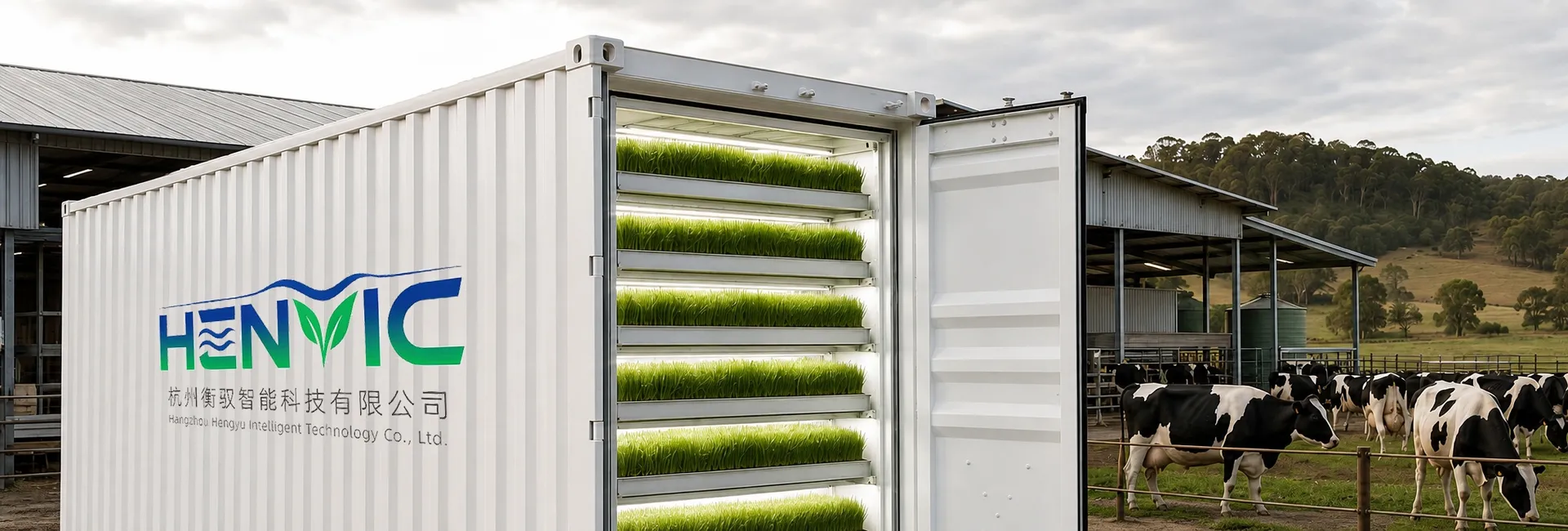
1. The Container as a Distinct Engineering Object
A leafy-green cultivation container is not simply a grow room that happens to be box-shaped. The form factor imposes its own engineering discipline, and it is worth stating why at the outset.
Standard ISO dimensions are non-negotiable. A 40-foot high-cube gives roughly 12.0 m of internal length, 2.35 m of width and 2.6–2.7 m of usable height; a 20-foot unit gives about 5.9 m. External width is fixed at 2.44 m because the container must sit on a truck chassis, pass through port gates, and stack at terminal density. Ceiling height, not floor area, is therefore the resource the grower must exploit — every additional tier is a multiple of output from the same shipped, road-legal footprint.
That constraint shapes everything downstream. Because the envelope must survive transport, lifting and stacking, the structure is a steel frame with corrugated Corten-type panels and ISO corner castings, not a building. Because internal volume is roughly 60–70 m³ (40 ft) with only 2.35 m of width, air distribution is a short-throw, high-mixing problem rather than a duct-and-diffuser problem. And because the unit is shipped complete, all climate, lighting and nutrient plant must be integrated, tested and road-transportable as a single deliverable.
The container's competitive claim is therefore precise: it is a factory-built production unit that can be delivered, commissioned and operated anywhere, with reported productivity per square metre of footprint several times that of field cultivation and a harvest cadence of eight to twelve cycles per year.
2. Cultivation System Selection
Leafy greens — lettuce, pak choi, spinach, rocket, kale, mustard, watercress and baby-leaf mixes — dominate container cultivation because they are short-cycle, shallow-rooted, low-biomass and whole-head harvestable. The cultivar matters as much as the system: container-adapted varieties need compact architecture, short internodes, delayed bolting under long photoperiods, and tolerance to the modest VPD swings unavoidable in a sealed module.
Four root-zone systems are in commercial use:
Nutrient film technique (NFT). A shallow film flows through inclined channels; roots form a mat at the base. Excellent oxygenation, low water inventory, and the merit of lightness — an important consideration when tray and channel mass multiplies by tier count. Risk: film interruption in one channel kills that channel's crop, so flow monitoring is a safety-critical function.
Deep water culture (DWC) / floating raft. Roots are permanently submerged in aerated solution. Thermally stable, forgiving of interruption, and easy to inspect. Cost: water mass per tier is high, adding structural load and thermal inertia, and dissolved oxygen must be maintained actively.
Substrate culture. Peat or coir plugs, rockwool cubes, or polyurethane foam blocks in shallow gutters, with drip fertigation. Most forgiving of system faults and closest to nursery practice, which simplifies transplanting. Cost: substrate purchase, disposal or sterilisation, and the shading and moisture buffering that substrate introduces into wet/dry cycling.
Aeroponics. Roots suspended in a misted chamber. Highest oxygenation and the fastest growth reported, but the smallest margin for pump or nozzle failure — minutes of interruption can be fatal. Generally confined to higher-value crops.
In practice, container units for leaf vegetables most often deploy NFT or DWC with a nursery stage on substrate plugs, because this combination minimises weight per tier while keeping the engineering simple and inspectable.
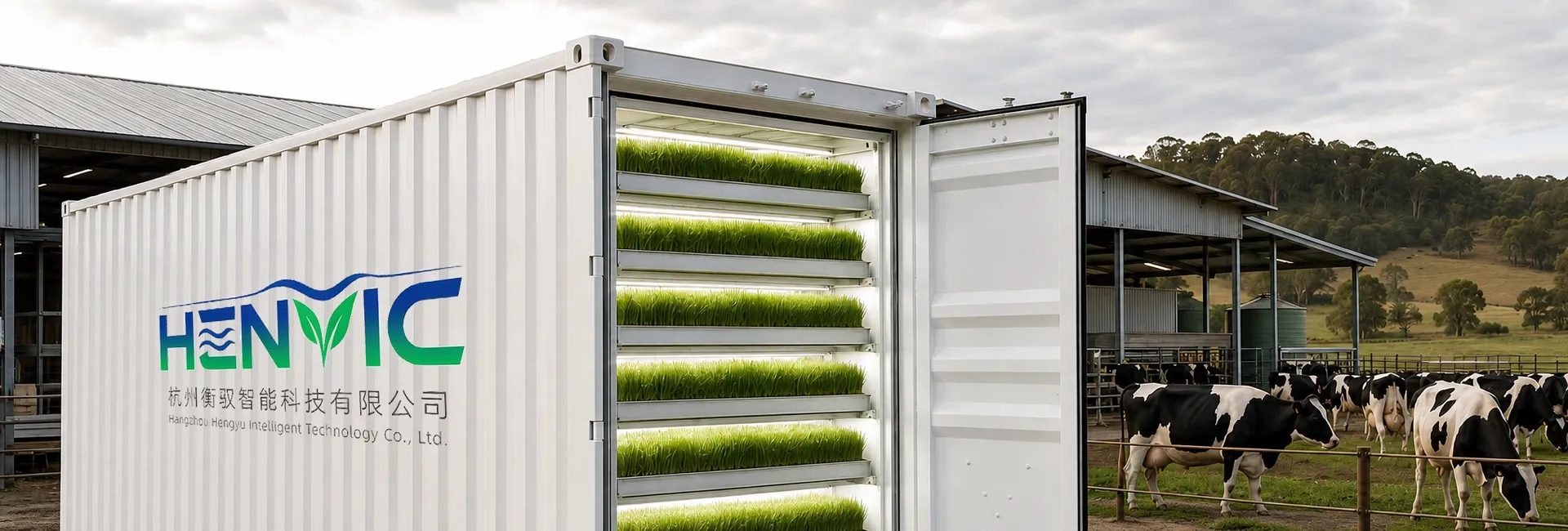
3. Multi-Tier Racking and Vertical Layout
Tier count is the central design trade-off. Four to six tiers is typical; more is possible but degrades uniformity.
Each added level raises output per footprint but simultaneously reduces the vertical space available for air movement and light throw, and increases the difficulty of achieving uniform photon flux and temperature from bottom to top. Practical mitigations include individually adjustable bar heights, side-emitting fixtures, alternating warm and cool zones, and vertical air circulation that mixes between tiers rather than only across the canopy.
Rack uniformity is the honest metric. Measured spread of 5 % in temperature and 30 % in canopy photon flux between tiers means the unit is agronomically five different cabins stacked together — a point that matters when a recipe assumes uniform conditions. Mechanical design must also allow full tray extraction for harvest, cleaning and inspection, which in a 2.35 m width means either single-depth racks with a central aisle or cantilevered multi-depth systems with rolling trays.
4. Lighting
Cultivation containers use LED bars almost universally. Design parameters:
• PPFD at canopy: 150–300 µmol·m⁻²·s⁻¹ for leafy greens, with higher values during finishing.
• Daily light integral: commonly 12–17 mol·m⁻²·d⁻¹. DLI is the number that correlates with yield, and it is determined by PPFD × photoperiod rather than by fixture count.
• Photoperiod: 16–20 h. Longer is not automatically better — extended photoperiod in bolting-sensitive cultivars costs quality, and the marginal photosynthesis from hour 19 is often poor value.
• Spectrum as a control input: blue governs compactness, thickness and phenolic development; red carries photosynthetic efficiency; far-red manipulates leaf expansion and can rescue low-light stretch, but over-supply risks elongation and looseness.
Because all electrical input in a sealed module eventually becomes heat, lamp efficacy is doubly valuable — it saves energy in the lamp bill and reduces the latent-plus-sensible load the cooling plant must reject. This coupling is the main reason system-level efficacy, not fixture price, drives container economics.
5. Climate Control
Temperature. Typical set-points run 18–24 °C, with 2–4 °C day/night differentials used to regulate metabolism and, in some cultivars, to manage tipburn risk. Thermal inertia inside a small sealed volume is low, so control must be responsive but not oscillatory.
Humidity and VPD. Relative humidity is held commonly in the 60–75 % band, but RH is a derived quantity and a poor control target. The meaningful variable is vapour pressure deficit, typically 0.4–0.8 kPa for leaf vegetables, because leaf-to-air vapour pressure difference drives stomatal conductance, transpiration and xylem-mediated calcium delivery to enclosed young leaves. Too low a VPD stalls transpiration and starves calcium — producing tipburn, the industry's signature defect. Too high a VPD accelerates transpiration beyond root uptake and causes marginal necrosis and wilting.
Air movement. Low-velocity, non-directed canopy sweep — on the order of 0.1–0.3 m/s — sustains transpiration without mechanical damage. Directed jets deform heads, desiccate margins and create the "half the rack is fine" pattern that usually indicates a flow-field failure rather than a control fault.
CO₂. Enrichment to roughly 800–1,200 ppm during lit periods is standard, and its value scales with light dose: carbon enrichment under a dim canopy buys very little.
Dehumidification sizing. The most common engineering error. Transpired water has nowhere to go and must be removed by condensation or exhaust. Sizing on cabin volume rather than peak transpiration guarantees humidity excursions.
6. Nutrient Solution and Root-Zone Management
Because all plant nutrition is delivered by solution, the loop is both a growth system and a chemical process.
Typical operating bands for leafy greens: pH 5.5–6.5; EC roughly 1.0–1.6 mS/cm depending on cultivar and stage, with a lower finishing EC to reduce nitrate and improve flavour; solution temperature 18–22 °C; dissolved oxygen above 5–6 mg/L. Nitrogen form matters agronomically as well as chemically — a nitrate-dominant supply with modest ammonium gives rapid growth, while excessive ammonium is phytotoxic and increases soft, disease-prone tissue.
Nitrate accumulation deserves specific attention. Leaf vegetables store nitrate in vacuoles and will exceed food-safety limits if nitrogen supply outpaces the light dose available to reduce it. Container control offers a genuine advantage here: reducing nitrogen and maintaining light for a defined finishing period before harvest reliably draws nitrate down — something field production cannot schedule.
Root-zone chilling and oxygenation are the real disease controls. Pythium and other oomycetes thrive in warm, hypoxic solution, and a container that cools only the air will lose crops from below. Every container should therefore instrument and control solution temperature and dissolved oxygen, not just air.
7. Envelope, Airflow and Environmental Engineering
Envelope. Insulated panels with managed thermal bridging, sealed against dust and spores, with a material airlock. Sealing serves biosecurity as much as energy efficiency: it keeps pathogens out and keeps the controlled regime in. Internal surfaces must tolerate permanent condensation and repeated sanitiser exposure, and the floor must drain completely.
Power, water and services. A 40-foot leafy container typically draws on the order of 15–30 kW at full load, dominated by lighting and cooling. Power provision is the single most common deployment constraint: a 63 A three-phase supply is a frequent practical requirement, and uninterruptible backup for lighting, circulation and control is now treated as mandatory rather than optional, since a sealed container loses a crop within hours of outage.
Filtration and biosecurity. Positive-pressure envelopes with HEPA-filtered intake and controlled exhaust reduce spore ingress. But the dominant biosecurity controls remain inter-cycle cleaning, filter integrity, the airlock, and personnel flow — not the filter alone.
Monitoring and control. Dense instrumentation is the defining feature of the "smart" container: air temperature, RH, VPD, CO₂, PPFD and spectral characteristics; solution EC, pH, temperature, level and dissolved oxygen; flow and pressure per channel; power and lighting status. An edge controller runs staged recipes with set-points, ramps, differentials, alarms and interlocks, and logs every batch. Remote operation over cellular or wired networks is now baseline.
8. Operational Economics and Where Containers Compete
The economics are simple in structure and unfavourable in the abstract. Inside an insulated box, essentially all electrical input becomes heat, so lighting efficacy and cooling COP are coupled. A useful first-order estimate: a leafy container running 200 µmol·m⁻²·s⁻¹ at 16 h with lamps near 2.7 µmol/J consumes roughly 1.2 kWh per square metre of canopy per day for light alone; cooling adds roughly a third again at COP 3, humidification and dehumidification of the transpiration load add a comparable increment, and pumps, fans and controls add a smaller tail. Converting that to cost per kilogram requires the denominator vendors rarely publish — harvested output per square metre per day after defect loss.
Consequently containers do not win on cost per kilogram against field production for commodity crops. They win in defined niches:
• Extreme and remote environments — deserts, polar and high-altitude sites, islands, mining camps and offshore installations, where the comparator is airfreighted or absent fresh produce, not local agriculture.
• Food-safety-critical supply — pesticide-free sealed production with full batch traceability for hospitals, infant nutrition, pharmaceutical-adjacent use and export markets carrying residue limits.
• Urban and premium retail — very short supply chains, live-with-root packaging, consistent year-round quality and branded cultivars.
• Research, breeding and nursery — controlled, replicable environments for phenotyping and cultivar screening.
• Skill and training — compact, instrumented platforms for agricultural education and controlled-environment training.
The reported productivity figures — a 30- to 40-square-metre footprint supporting over 150 m² of equivalent growing area and more than 2,000 heads per cycle with eight to ten harvests annually — are per-land-area comparisons. They are real and they are not cost claims.
9. Commissioning and Verification
A container is a delivered machine, and it should be accepted as one. Useful acceptance evidence includes: a grid map of temperature, humidity, CO₂ and photon flux at every tier and corner to establish the design space the recipe assumes; pressure-decay testing for envelope integrity; recipe replay validation against logged targets across a full cycle; calibration records for every sensor, since a 0.2 mS/cm EC offset or a few percent of RH drift is invisible on a dashboard and unmistakable in the harvest; and a documented power-loss contingency.
10. Failure Modes and Diagnosis
Work erratic performance along a fixed chain rather than adjusting set-points empirically: sensor → control logic → plant capacity → distribution field → envelope integrity → input quality.
The recurring patterns are specific. Marginal necrosis and tipburn indicate low VPD or absent canopy airflow — raise the gradient before adding calcium. Elongation and loose heads indicate over-long photoperiod, far-red excess or warm root zones. Systemic root browning indicates solution temperature and dissolved oxygen, not the nutrient formula. Batch-to-batch drift indicates calibration decay. Localised losses indicate flow-field or channel-specific failure. And in a sealed module, one contaminated batch becomes many, so cleaning discipline is the true yield-protection measure.
11. Specification Checklist
Which cultivar, and is the recipe validated on it? What is the measured uniformity of photon flux, temperature and airflow at every tier? Is dehumidification sized at peak transpiration? Is the root zone chilled and oxygenated, and is dissolved oxygen instrumented? Is VPD controlled or merely displayed? What is the electrical supply requirement, and is backup provided? Does the software expose staged recipes, full batch logging, alarm history and calibration records? Is the unit road- and stack-transportable as delivered, and what is the commissioning scope? Who owns the recipe data?
A container that cannot answer these questions is a lit box with a pump.

Evidentiary note. The parameters and bands above — PPFD, DLI, photoperiod, VPD, RH, solution pH/EC, root-zone temperature, dissolved oxygen, CO₂ — are general controlled-environment and hydroponic practice for leafy vegetables, offered as typical design bands rather than audited site data; they vary with cultivar, climate, tier count and fixture, and must be established experimentally per unit. Dimensional and power figures are indicative of standard 20- and 40-foot configurations and typical container loads. Productivity multiples and harvest cadence are per-land-area comparisons reported in Chinese industry and municipal coverage of container plant factories and should not be read as cost-per-kilogram performance. The energy estimate in Section 8 is an illustrative calculation with its assumptions stated explicitly, intended as a method for building a business case rather than a performance claim.